Style & Grooming
In the Living Well After 50 hub.
Haircuts for Men Over 50 with Thinning Hair
Some links below are affiliate or referral links, if you buy through one I may earn a small commission at no extra cost to you. I only recommend gear I actually use, see my full kit on the My RV Setup page. Full disclosure.
Editorial notice. Personal notes from a guy in his 60s, not a stylist or clinician. Take what fits. Skip what doesn't.
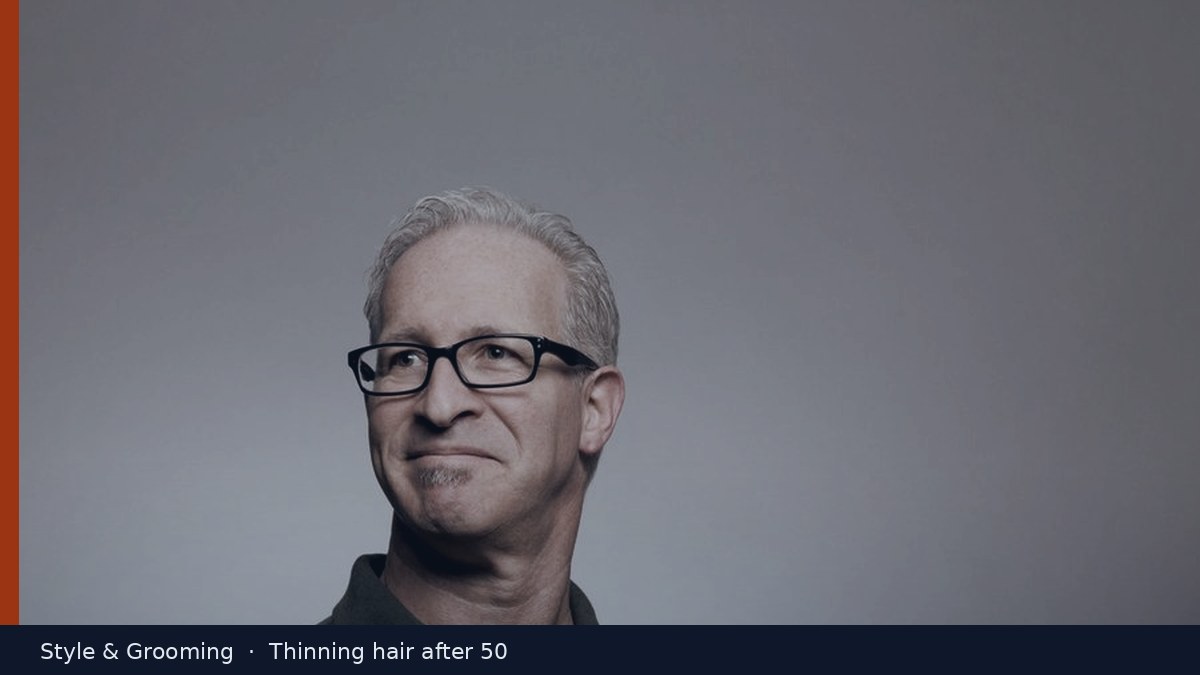
Go shorter, not longer. That's the answer for thinning hair after 50, and the rest of this page is just the specifics of how short, and what to say in the chair, depending on how far along you are. I wrote a broader piece on the best haircuts for men over 50 that covers cuts and timing for the whole decade. This page is narrower. It's for the specific problem of thinning on top, because thinning has its own mistakes that a general haircut article doesn't have room for.
A word on where this advice comes from before you get into it. My hair isn't thinning much, so the cut advice below isn't a story about my own chair. It's pulled together from barber educators who cut thinning hair for a living, people like the instructors at Cadmen Academy and Mens Minimal, plus a 2026 rundown from Haircut Suits Me on cuts built specifically for thinning hair. What's actually mine in this piece is the grey hair section near the bottom. That's the part I live with and have opinions about from doing it, not from reading about it.
Find your row, then say the line
Start here. Find the row that matches how thin you actually are, not how thin you're afraid you might get, and use the chair line as written.
| How thin you are | Cut to ask for | What to say in the chair |
|---|---|---|
| Mild. You notice it more than other people do, maybe a little extra scalp along the part. | Short taper or a textured crop, kept close on top so there's no long length to show through | "Take it shorter on top than you think I want, and taper the sides in tight." |
| Moderate. Crown or temples are visibly thinner, even to other people. | Caesar crop or a tighter taper, cut specifically around the thin spot | "I'm thinning at the crown (or temples). Cut around it instead of trying to cover it." |
| Advanced. A comb would show more scalp than hair on top. | Buzz cut, grade 2 to 4, or shave it the rest of the way | "Just buzz it all. I'd rather own it than style around it." |
Crown, temples, or even, the cut changes by location too
The table above is about how much is thinning. This part is about where. A barber needs both pieces, because the same amount of thinning at the crown and at the temples calls for different handling.
- Thinning at the crown. This is the spot on the back of your head you can't actually see in a normal mirror, so it sneaks up on you. A short taper or a crew cut works well here because an even length all over removes the contrast between thicker hair around the crown and the thin patch itself. There's nothing left for the eye to compare against.
- Thinning at the temples. The instinct here is to grow the hair at the front a little longer to cover the recession. Don't do that. Longer hair up front just draws a line where the recession is and makes it more obvious, not less. Keep the front short too, tapered in with the sides, so there's no long section sitting next to a receded one for anyone to notice.
- Thinning evenly across the whole top. This one is actually the simplest to deal with. There's no specific spot to protect or work around, so go shortest overall, a tight taper, a crew, or a buzz if it's thin enough. No length anywhere means no length to show the thin parts through.
Soft taper, not a skin fade
Skin fades and thinning hair fight each other. A high skin fade takes the sides down to bare skin, and bare skin sitting right next to thin hair on top is the sharpest contrast you can build into a haircut. The eye goes straight to wherever the contrast is biggest, which is exactly what you don't want when the top is already thin. Cadmen Academy and Mens Minimal both land on the same fix for this: a soft taper instead of a high fade. A taper brings the sides down gradually rather than all at once, so there's no hard line sitting next to the thin spot for anyone to notice. Same idea as the crown and temple advice above, just applied to the sides instead of the top.
What to say, and not say, in the chair
Thinning hair needs more specific direction than a regular haircut, because the barber can't always tell from a glance exactly where you're losing density or how much you care about it. Here's what actually helps, and what to stop asking for.
- Point to the spot. Tell them crown, temples, or the whole top evenly. A barber who knows exactly where you're thin can cut around it on purpose instead of guessing and leaving length in the wrong place.
- Don't ask for "just a trim." A trim keeps the shape you already have, which is the shape that stopped working. Ask for a taper instead, something that actually changes the length and the pattern rather than repeating it a little shorter.
- Don't ask them to grow the front to cover anything. Covering a thin spot with longer hair from somewhere else is a comb-over by another name. It doesn't fool anyone, and thin hair grown long looks thinner, not fuller.
- Ask for shorter than feels natural. Your instinct will be to keep some length "just in case." Fight that instinct. Say "go shorter on top than you think I want."
- Ask them straight what they would do. They see thinning hair all day. "What would you do with my hair if it were yours" gets you a real answer instead of a repeat of whatever you asked for last time.
- Say you want low maintenance. A good barber will cut it so it falls into place without product, which matters even more with thin hair since there's less of it to hold a style anyway.
And the person cutting it matters more than where you go. Whether it's a chain or a proper barbershop, someone who has cut thousands of heads of thinning hair will know things a shop that mostly does regular fades won't think to try.
How to actually check how thin you are
Here's a trick worth knowing before you ever sit in the chair. Thinning hides when it's dry and styled, and shows up honestly when it's wet. Next time you're in the shower, take a look at your hair soaking wet, flat against your head, no product, no styling. That's close to what your barber sees the moment they wet your hair down to start cutting, and it will tell you the truth about where you're actually thin faster than any mirror check in the morning.
While you're looking, check your part line too. If you can see more scalp along it than you could a few years back, that's the same signal as the wet-hair check, just easier to notice day to day. Both point to the same fix: shorter, not longer.
How a short cut grows out on thin hair
Quick disclosure: some of the links below are affiliate links. If you buy or book through one, I may earn a small commission at no extra cost to you.
Short cuts grow out faster looking than long ones, and that goes double once your hair is thin, because there's so little length to begin with that even small regrowth shows. I go in every three to four weeks now to keep the taper sharp, instead of the six to eight weeks I used to stretch it when I had a longer cut and thicker hair. Between visits, a trimmer at home keeps the neckline and beard clean so the cut doesn't look grown out halfway through. I use a Philips Norelco All-in-One 3000 Series, the MG3919, with a guard for the beard and a closer setting for the neckline, and it stretches a fresh cut by a week or two without a trip back to the chair.
If you landed in the advanced row up top and went with a buzz, a set of clippers at home pays for itself fast. A buzz grows out noticeably within a week or two, and running your own clippers over it between barbershop trips is a lot cheaper than paying for a fresh buzz every other week.
The beard as balance
This is the part nobody tells you. As the top thins, a neat beard becomes the thing that balances your whole face out. It adds structure below where the hair used to add structure above, it frames the jaw, and it draws attention down and away from a thinning crown or hairline. Pair a short cut, or a shaved head, with a well-kept beard, and the overall effect reads as strong and put together rather than as a guy losing his hair.
The word doing the work there is neat. A beard that's scraggly or uneven cancels out a good haircut just as fast as a bad one does. Keep the lines clean along the cheeks and neckline, and trim it on a regular schedule rather than letting it grow wild between cuts.
Grey and thin together
When the top thins and goes grey at the same time, it can feel like two problems at once, but the fix for each one is separate and neither one is complicated. For the thinning, go shorter and be specific about where, as covered above. For the grey, you don't have to fight it or hide it completely. I stopped trying to erase mine with a hard dye and instead work a little Just For Men Control GX shampoo through my hair in the shower a couple of times a week. It's gradual, not a dye job, so it just takes the edge off the stark white rather than erasing the grey outright. You can see how the gradual formula is supposed to work on the Just For Men site if you want the details before trying it. If the grey is bothering you more than the thinning, I wrote a longer piece just on going grey after 50 that covers that question on its own.
The same research that backs the soft taper call is consistent on one more thing too: skip anything shiny. A shiny product on thin hair makes the scalp underneath more visible, not less, and it reads as older, not younger. Matte does the opposite, it adds the impression of thickness instead of highlighting where there isn't much hair left, and you don't need much of it. If your hair loss has you wondering about the medical side of things rather than just the styling side, the American Academy of Dermatology has a solid, non-alarmist rundown of how dermatologists diagnose and treat hair loss and how it typically progresses.
None of this is about hiding that you're thinning or grey. It's about not fighting either one, cutting the hair shorter to match where it actually is now, and letting a beard and a low key routine do the rest. It's the same "stop fighting it, work with what you actually have" approach behind a couple of other things I changed after 50, like how I sleep better after 50, how I approach building muscle after 50, and the handful of supplements I actually kept using after 50.
If you take one thing from this page, take this. Find your row in the table up top, say the line that goes with it instead of asking for "a trim," and keep the beard tidy. That combination will do more for how you look than any product on this page.