RV Tech & Tips
Cochiti Lake RV Camping: Site 71 on Ringtail, No Hookups Needed
Some links below are affiliate or referral links, if you buy through one I may earn a small commission at no extra cost to you. I only recommend gear I actually use, see my full kit on the My RV Setup page. Full disclosure.
Cochiti Lake sits between Santa Fe and Albuquerque, and it's a Corps of Engineers campground, which already tells you something. I've never been to an Army Corps campground that wasn't well built and well taken care of, and this one is no exception. We rolled in November 2023, parked the Thor Compass on site 71, and stayed put for a couple of days without ever hooking up to anything.
If you're weighing Cochiti Lake RV camping against the other spots off I-25, here's what I actually found on the ground, plus what the reservation system and the Corps say about the loops now. I've written before about how I hunt down a waterfront pad on a crowded weekend, and Cochiti is a good example of a spot where the quiet, closer-to-the-water loop isn't even the one everyone books first.
Watch the walkthrough
This is straight from my own visit, the campsite, the loop, and the ride out to the dam, filmed on the ground at Cochiti Lake for Second Wind / Dom's Tech Treks.
Filmed and narrated by me at Cochiti Lake, November 2023.
Site 71, Ringtail Cat, and why I'd pick it again
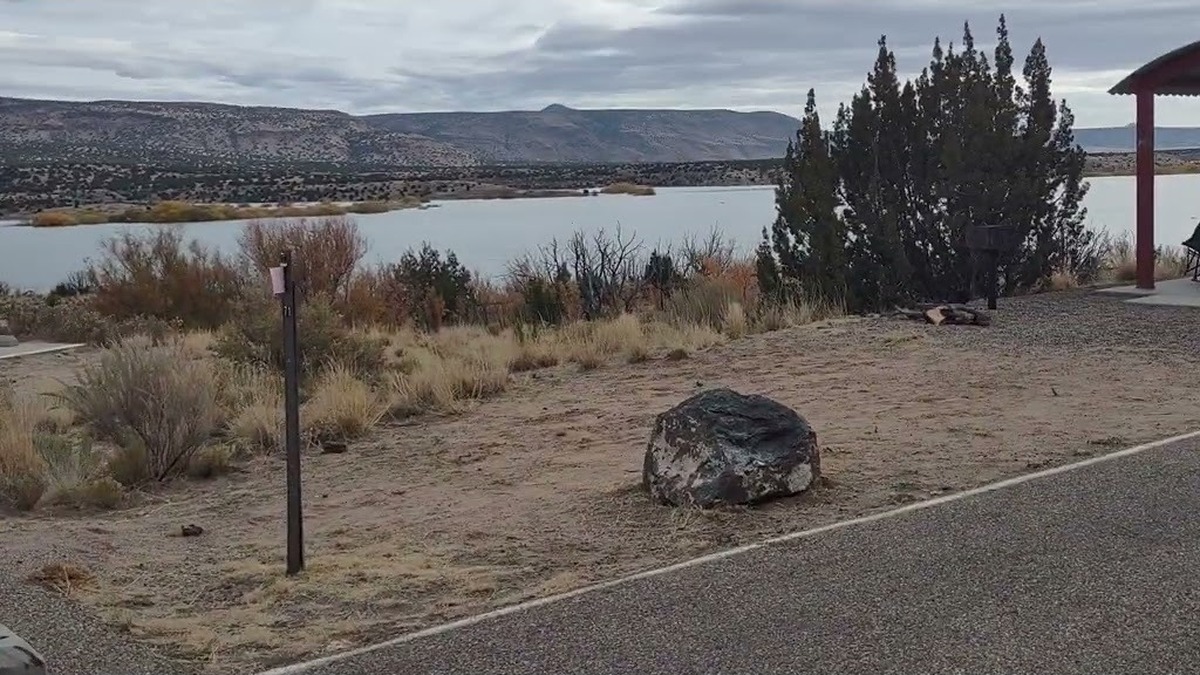
The campground is roughly 20 to 30 minutes off I-25, a short detour if you're already running the Santa Fe to Albuquerque corridor. Inside, there are a few loops, and I stayed on Ringtail, the loop closest to the water. Site 71 was ours, site 69 was right nearby, and site 61 was in the same neighborhood. No power, no water hookups at any of these sites. There are community water spigots scattered around the loop so you can fill your tank, but that's it.
That didn't bother us. We run lithium batteries in the Compass, plenty of stored power for a couple of days without shore power, and we had a generator along as backup if we needed it. Smaller rig, smaller footprint, and it meant we could pull into a no-hookup site and not think twice about it. The other loops at Cochiti have power and water, and from what I could see they were noticeably more crowded. Ringtail was quiet, and the view from site 71 was the best trade I could have made.
What the loops actually offer, checked against the current listing
My firsthand read from the ground is that Ringtail has no hookups and community spigots, and that lines up with the current Recreation.gov listing for the campground. As of today, Cochiti has four named loops: Buffalo Grove, which is full water and electric, Juniper, which is electric with some water access and roughly a 100 foot hose to reach the shared spigots, and Elk Run and Ringtail, which are non-electric with community water spigots. That matches exactly what I found in person on Ringtail, a loop built for people who don't need a pedestal and don't mind carrying a hose to the spigot.
There's a boat ramp on site year round, alcohol isn't permitted anywhere in the campground, wood campfires aren't allowed, and the lake itself is a no-wake lake, so don't expect a bunch of speedboat traffic tearing up the water. The campground sits within Pueblo de Cochiti land, and there's a separate camping area called Tetilla Peak on the other side of the lake that I did not stay at, so I can't speak to it firsthand.
Booking and what it costs now
Cochiti is reservation only now through Recreation.gov, campground 233461. From what the Army Corps posts on their own Cochiti Recreation page, non-hookup sites like the ones on Ringtail run around $15 a night, and electric-plus-water sites on the hookup loops run around $20. Those numbers move, so before you lock a date, check the live listing on the USACE Cochiti Recreation page directly, since fees and loop availability get updated there faster than anywhere else.
If you want a hookup loop for the AC or the fridge to run without touching your battery bank, book Buffalo Grove or Juniper early. If you'd rather have quiet and a water view and don't mind managing your own power and water, Ringtail is the move, and it's the one I'd book again.
Running dry camp power without stress
The reason a no-hookup loop like Ringtail is a non-issue for us comes down to what's already on board. Lithium batteries hold a real charge over a couple of days of normal RV use, lights, fridge, water pump, the occasional laptop session. If I were setting someone up for their first dry camp weekend, I'd point them at a dedicated lithium bank like Battle Born lithium batteries (affiliate link), which is the kind of setup that made sites like 71 painless instead of a math problem every evening.
For anything beyond basic house loads, generator or solar backup still matters. I keep an EcoFlow power station (affiliate link) in the mix as a buffer for exactly this kind of trip, somewhere between the battery bank and the generator, so a short generator run tops things off without babysitting it all evening.
Riding out to the dam
We brought the electric bikes and rode toward the dam, more than five miles round trip along the lake. The boat ramp was visible from the trail, and the Rio Grande feeds into the lake right around there. The lake looked high and a little flooded for November, which made me think there'd been some kind of runoff or water management issue over the summer, though I'm only guessing at the cause. Off toward Albuquerque, the Sandia range was visible in the distance. It was a quiet day, nobody else out on the water, just us and someone running a leaf blower somewhere back in the campground.
The no-wake rule on the lake means you won't get buzzed by ski boats while you're out there, which made the ride along the shoreline feel more like a walk than a highway shoulder. We didn't put a kayak in the water on this trip, but the flat, quiet surface made it obvious why paddlers and anglers like this lake. If fishing or kayaking is the point of your trip rather than just a place to park the rig, that no-wake water is worth building the visit around.
Quality of the campsites
Whoever maintains Cochiti put real money and effort into the sites. That's consistent with my general experience of Corps of Engineers campgrounds, they always seem to be well built and well taken care of, more so than a lot of the state or private campgrounds I've stayed at. The shelters and pull-through areas on the loop looked solid, not thrown together.
Who this fits
If you're traveling the Santa Fe to Albuquerque corridor and want a legitimate waterfront stop that isn't a gravel pullout, Cochiti Lake earns the detour. Ringtail is the loop I'd pick if your rig can handle a couple of days without hookups, since it's quieter and closer to the water than the electric loops. If you need shore power for medical equipment, a big AC load, or you just don't want to manage a battery bank, book Buffalo Grove or Juniper instead and expect more neighbors. Either way, check current fees and loop status on Recreation.gov and the Corps page before you lock a date, since reservation systems shift faster than a blog post can track.
Timing matters here too. We went in November and got a warm, quiet, low-traffic weekday, which is a very different campground than a July Saturday on the hookup loops. If you can travel off-season or midweek, Cochiti rewards it with the kind of empty water we had. If you're stuck with a summer weekend, book early and expect the electric loops to fill first.
Bottom line from site 71
Cochiti Lake RV camping, for me, was a warm November afternoon, a dry camp pad closer to the water than any hookup site could get me, lithium power that made the lack of shore power irrelevant, and an easy detour off I-25 that's worth building a whole Santa Fe or Albuquerque trip around. I'd stay on Ringtail again, and I'd tell anyone weighing dry camping against a crowded hookup loop to take the quiet water view instead.