RV Tech & Tips
Pecron F3000 Running Starlink in Our RV Bay (100-200 Mbps)
Some links below are affiliate or referral links, if you buy through one I may earn a small commission at no extra cost to you. I only recommend gear I actually use, see my full kit on the My RV Setup page. Full disclosure.

On September 22, 2026 I filmed this at home while polishing the Compass. One-handed phone video: dish on the grass, Pecron F3000 LFP in the storage bay reading about one percent on the display, Starlink brick into the Pecron AC.
Here is the sequence from that September 22 clip, in order — what I actually did on camera:
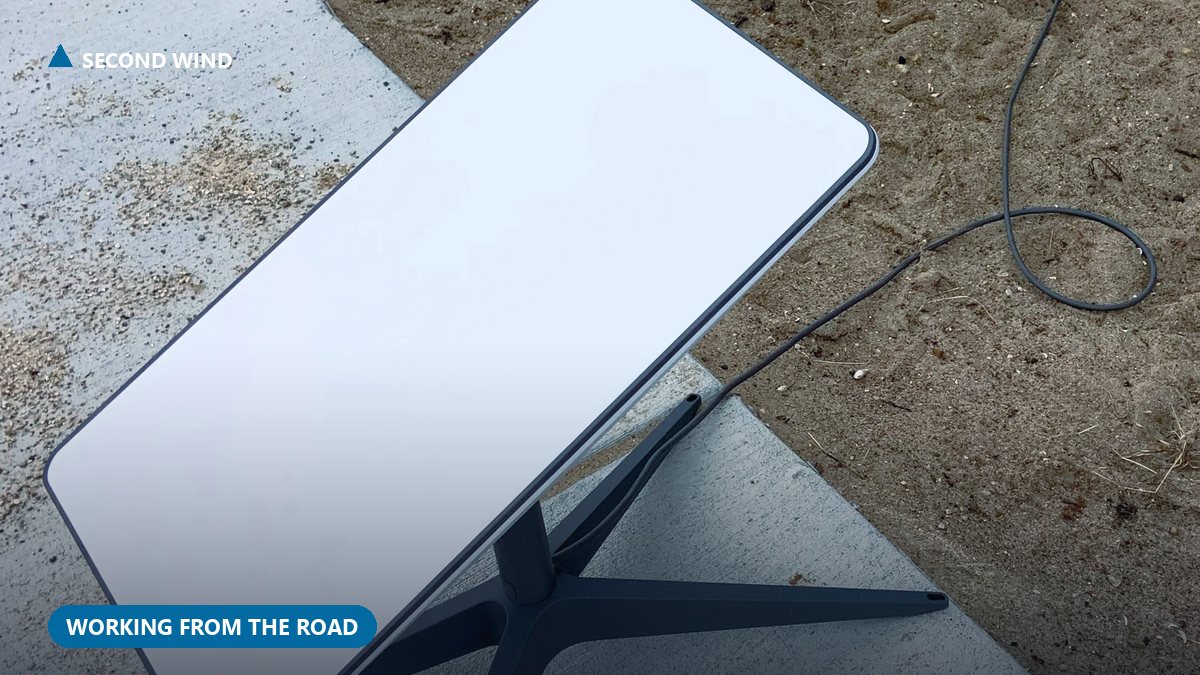
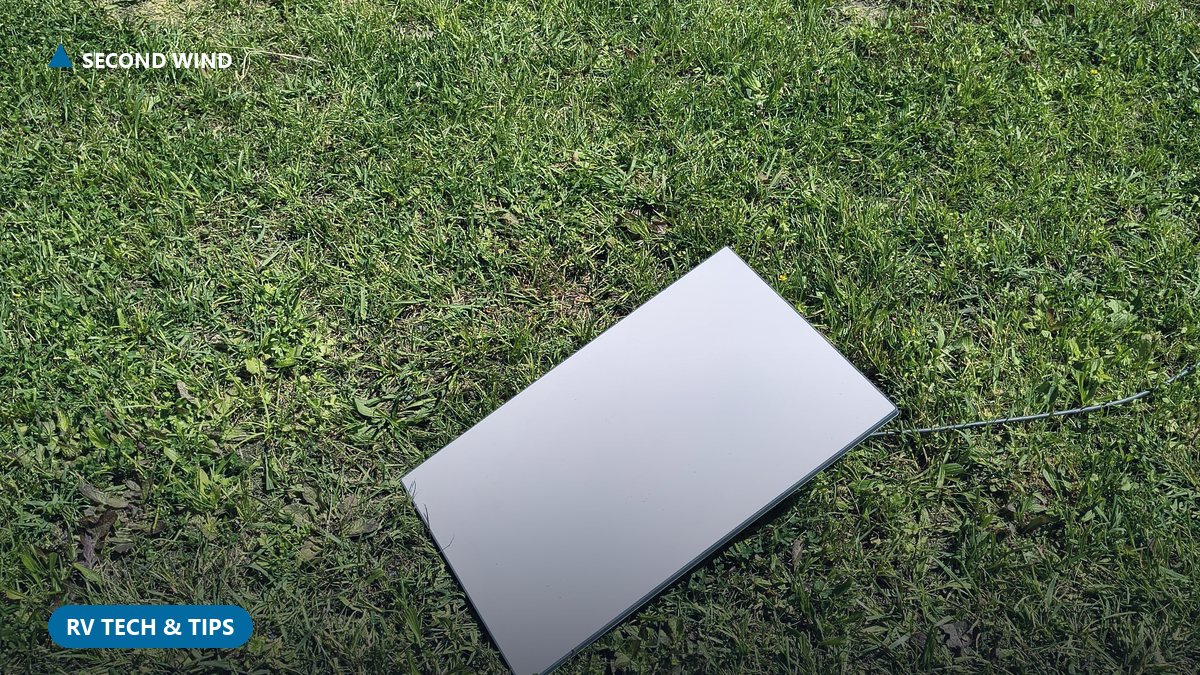
- Opened the Starlink soft case on the grass beside the Compass AWD and set the larger rectangular dish face-up (not the Mini).
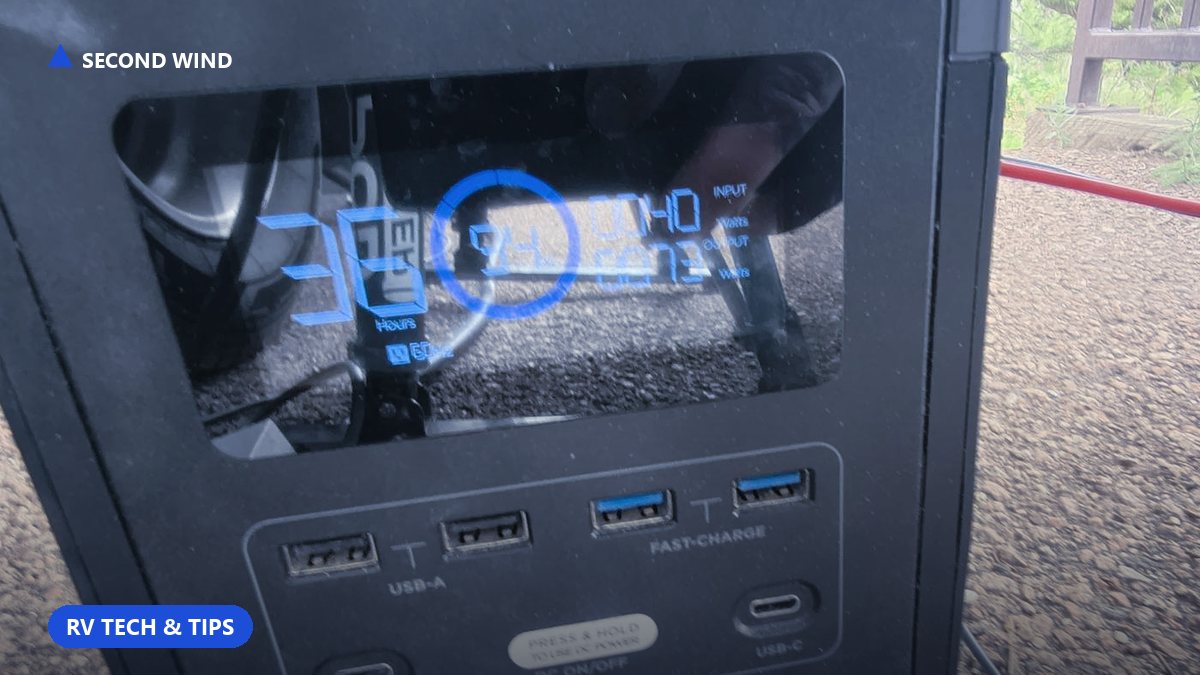
- Opened the storage bay by the rear wheel and showed the Pecron F3000 LFP already sitting there, display at about one percent.
- Traced the gray cable to the dish, plugged it into the back of the dish (needed both hands), then plugged the router power brick into a Pecron AC outlet and turned AC on.
- Pointed at the TT-30 / drilled-hole whole-RV option in the same bay, then walked to the onboard Onan and said that is how I refill the Pecron when it is low.
I already keep a Pecron F3000 LFP in the bay of our Compass AWD. This is the short, firsthand version of how I set up Starlink off that same station: rectangular dish on the grass, router brick into the Pecron AC, and real speeds in the hundred-to-two-hundred Mbps range at this spot. No shore pedestal. No generator running just to keep the internet up.
If you want to watch the plug path instead of reading it, the phone video is right here.
Video: Pecron F3000 running Starlink on our Compass AWD (phone video).
Dish on the grass, kit out of the bag
I laid the Starlink kit out on the grass next to the coach. Soft case with the teal trim, gray Starlink cable, white router and power-supply brick, and the larger rectangular flat dish. Not the Mini. Dish goes on the grass with a clear view of sky. That is the whole outdoor half of the job on this take.
Nothing fancy about the mount for this clip. Lawn, cable run back toward the open storage bay, router staying where I can reach the Pecron AC outlets. You can also see the CITY WATER CONNECTION inlet above that bay on the Compass body. Useful landmark if you are matching the video to the stills, and it is not an address.
There is a foldable dark panel or case in the same grass layout, solar-adjacent, plus an MC4 adapter cable pack marked for portable solar. I am not claiming a full solar day in this article. Those pieces are what showed up in the unbox and bay work. The story here is AC from the Pecron to the Starlink brick.
Pecron F3000 LFP in the bay
Open the storage bay on the Compass AWD and the Pecron is already sitting there. Logo and F3000 LFP on the panel. On this take the display showed about one percent. That is not a recommended operating point for a workday. It is just what the panel said when I opened the door, and it was still enough to prove the plug path while I talked through the outlets. I have seen that same display at fuller states on other days. One percent was the honest reading for this clip.
The front panel is what matters for Starlink and for coach feed:
- Household AC outlets for the Starlink power brick
- USB-C at 100W for phones and small gear
- A NEMA TT-30 style 30-amp outlet when I want the station to feed the whole RV
That mix is why this particular station lives in the bay instead of on a folding table outside. Unplug the brick when we roll, leave the station where it sits, open the door again at the next stop.
If you want the bigger picture of how the F3000 sits next to the house bank and the onboard generator in the full off-grid math, that lives in my off-grid RV power write-up and on the full setup page. This page is the field plug path from the phone video, not a second copy of the 5,600Wh inventory.
Plug Starlink into the Pecron AC
The move is simple on purpose. Plug the Starlink router power brick into one of the Pecron AC outlets. Gray AC cord out of the station, cable toward the dish and router on the grass. Pure sine AC from the station is what the stock Starlink brick expects, so I am not building a custom DC conversion for this setup. I am using the station the way it already sits in the bay.
That is also why a power station this size earns its keep for internet. Starlink is a steady draw, not a surge monster on its own, and keeping it on clean battery power means generator cycles and coach loads are not slamming the dish mid-call. I have written about that failure mode in Your AC Will Kill Your Starlink. Here the point is narrower: the F3000 can be the AC source for the dish while it lives in the bay, even on a take where the display looked nearly empty.
Most "best power station for Starlink" pages stop at a runtime chart. Useful. Not the same as watching the brick go into a station that already lives in your coach.
The 30-amp whole-RV tip
Same panel that feeds Starlink also has the 30-amp outlet. I can feed the whole RV from the Pecron through a drilled hole into the bay, TT-30 style, when I want the station on coach loads instead of only the internet brick. That is a different job than "router in AC outlet," but it is why this unit sits where it sits.
We still have the Onan onboard generator as the heavy-lift option for air conditioning and fast charging. The Pecron is not trying to replace the Onan for every load. It is the quiet, already-there battery for Starlink, and for 30-amp coach feed when that is the better tool that day.
Would I buy the F3000 just for Starlink?
Honest answer: no. If the only job is keeping a dish online, a smaller station is enough and costs less. I bought the F3000 because I also wanted the 30-amp whole-RV feed from the same bay unit. Starlink is the everyday draw. The 30-amp outlet is why this size lives in the coach instead of a lighter pack on the picnic table.
Same honesty on charge state. One percent on the display was fine to show the plug path on camera. It is a bad plan for a full remote-work day. Charge from the house, solar, or the Onan first, then run the dish. The setup only looks "simple" when the battery is not already empty.
Speeds in this spot: about 100 to 200 down
On this setup, downlink sat about a hundred to two hundred Mbps. That is what I said on camera for this location. Not a lab chart. Not a promise under every tree canopy in America. For video calls and real work, that range is more than enough.
If you want the watt-side math for how hard Starlink pulls on a battery hour by hour, see Starlink power consumption. This page owns the plug path and the speed claim from the footage, not a second wattage study.
My wife and I use this stack for the boring reason: the paycheck still needs a link when the coach is not on a pedestal.
What this is, and what it is not
This is a firsthand plug path from gear we already own:
- Rectangular Starlink dish on the grass
- Pecron F3000 LFP in the Compass AWD bay
- Starlink brick on Pecron AC
- Optional 30-amp feed for the coach through the bay hole
- Speeds in the 100 to 200 down band at this spot
- Onan still there when heat or fast charge needs the generator
It is not a MegaWatt solar array build. It is not a Mini-only 12V wiring diagram. It is not a claim that one percent state of charge is how you should run a workday. Charge the station. Then run the dish off it the same way I plugged it in the video.
Shop the gear in this video
- Pecron F3000 LFP (Amazon), the station in the bay, AC for Starlink, TT-30 for whole-RV feed.
- Starlink, referral link, we each get a free month; it is not a paid commission. Code: RC-2498945-69627-86.
As an Amazon Associate I earn from qualifying purchases.
I write about the road and the setup most weeks in Second Wind on Substack. Free signup if you want the next field notes without hunting for them.
That is it for now. I'm Dominic. See you down the road.